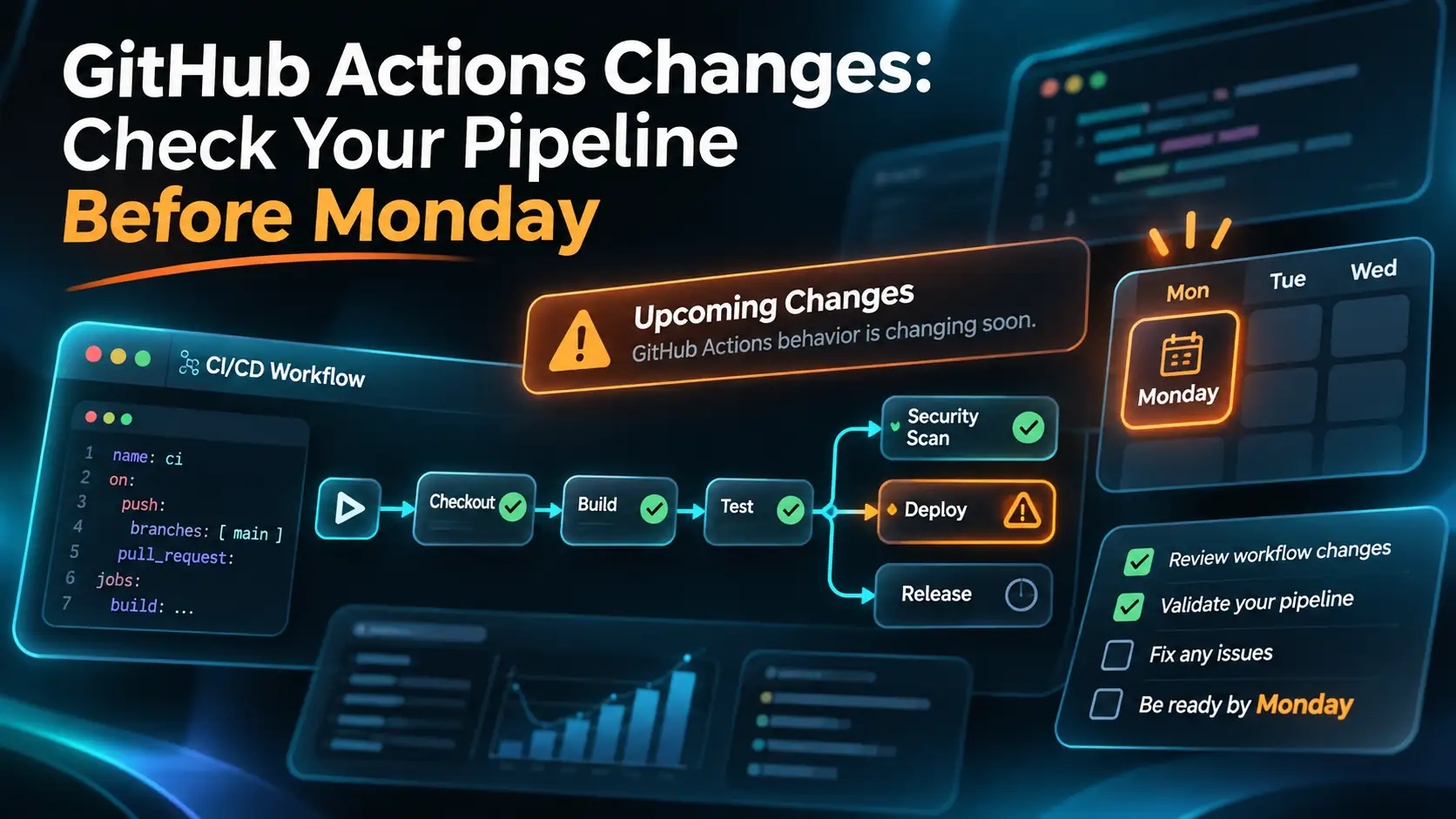
The GitHub Actions changes announced on 2 November 2026 can interrupt public-repository workflows next Monday. GitHub’s updated timetable sets temporary enforcement windows for 9 and 16 November, 16:00–18:00 UTC. In Athens, those windows run from 18:00 to 20:00. Therefore, teams shipping websites from public repositories should inspect their workflows before the first window.
Which GitHub Actions Changes Apply to You
The rule targets pull_request_target in public repositories without an applicable policy allowing it. Permanent enforcement starts on 2 December. Private and internal repositories fall outside this change. Consequently, this is a specific pipeline check rather than a reason to replace your deployment system.
First, ask whoever maintains your repository whether the trigger appears in any workflow. A public plugin repository may use it even when your main business application stays private. Include supporting tools in the check, because a failed release helper can still delay a customer delivery.
Understand the Permission Boundary
The trigger operates with the base repository’s trust and can access its secrets. That matters when a workflow also runs code supplied by an outside contributor. GitHub explains that boundary in its security guidance. Our recommendation is to inspect each job’s actual inputs before granting an exception.
For example, a job that adds a label has different needs from a job that installs dependencies and executes tests. Keep outside code away from privileged credentials. In addition, review reusable workflows and helper scripts; the risk may sit one file away from the trigger.
Use the Warning Period to Rehearse
Next, inspect policy insights for runs that would fail. Assign an owner to each affected workflow and write down the expected replacement or narrowly scoped allowance. Avoid adding a broad exception simply because a release is approaching. A temporary deadline does not change what outside code can do.
Then rehearse an ordinary pull request and the release process in a safe environment. Record which checks must pass before deployment. Our software development articles cover related delivery decisions, while the security archive provides the wider context.
Finally, put the two November windows in your delivery calendar. Watch the resulting runs and resolve unexpected failures before December. The useful deliverable is a named workflow owner and a tested policy decision, with enough detail for the next maintainer to understand it.