

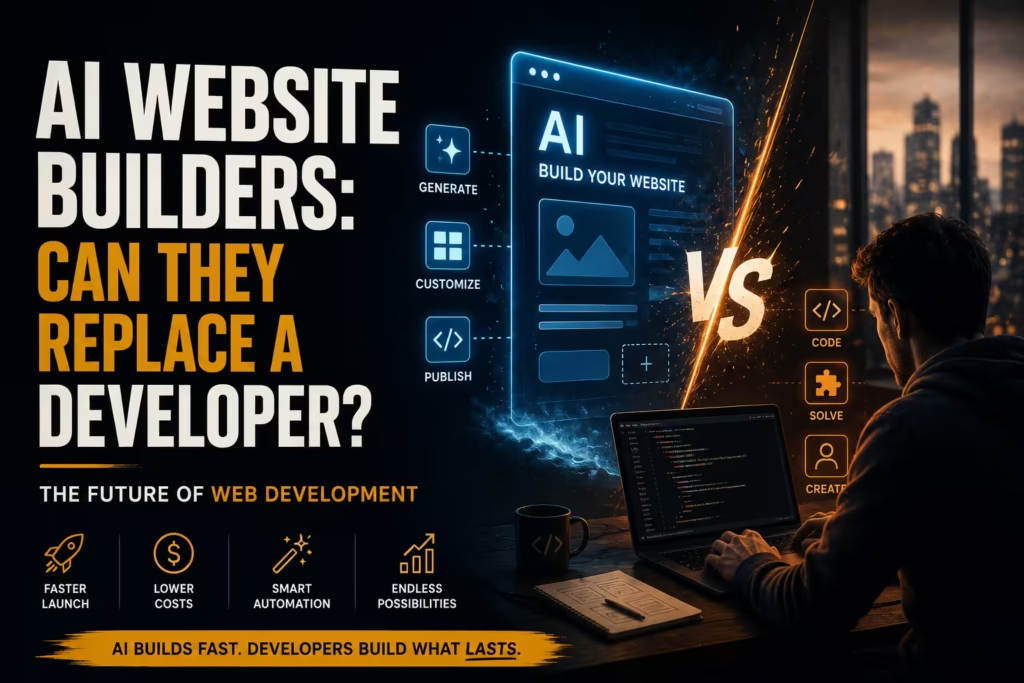
Type a sentence, get a website in minutes. That’s the promise of the new AI website builders, and it’s genuinely impressive. But can AI website builders really replace a developer for a serious business site? Let’s separate the marketing from what actually ships.
What AI website builders do well
First, credit where it’s due. AI website builders like Framer and others turn a prompt into a full layout, copy and images fast. Therefore, they’re brilliant for a quick landing page, a portfolio or an early MVP. As a result, a solo founder can launch something decent in an afternoon. For simple sites, AI website builders are a real time-saver.
Where they fall short
That said, the cracks show as needs grow. First, custom features and complex logic still trip them up. Second, the output can be generic, bloated or hard to edit later. Third, SEO, accessibility and performance often need a human hand. So a beautiful demo isn’t the same as a fast, converting site.
AI builder vs developer
- Simple landing page or MVP, tiny budget → AI builder wins.
- Custom features, integrations, real scale → developer wins.
- Ongoing edits, SEO and speed → a developer keeps you out of trouble.
- The sweet spot? A developer using AI to work faster.
The real cost question
Meanwhile, count the full cost, not just the sticker. First, a builder is cheap to start but can trap you on its platform. Second, fixing a shaky AI site later often costs more than doing it right. We break the numbers down in how much a website should cost. In short, cheap upfront isn’t always cheap overall.
The verdict
So, the verdict? AI website builders are a fantastic starting point — not a replacement for expertise. Use them to launch fast, then bring in a developer as you grow. If you want a site that starts right and scales, our team blends AI speed with human judgment. After all, the tool is only as good as the person steering it.