
A website can look modern, load fast, and still fail to win enquiries or sales. Visual quality matters, of course. However, strong website conversion depends on far more than looks. Design alone never tells visitors what to do, why to trust you, or why to act now. So a high‑converting site pairs a polished look with a clear commercial purpose. In short, it removes doubt at every step.
That does not mean cramming each page with aggressive pop‑ups and oversized buttons. Instead, it means removing uncertainty. Visitors should grasp the offer, see its value, and reach the next step without hunting for it.
Website conversion starts with one goal per page
First, give every important page a single main action. On a service page, that action is usually requesting a quote. On a product page, it is adding an item to the cart. On a SaaS landing page, it is starting a trial or booking a demo.
Meanwhile, a page that asks visitors to call, subscribe, download, follow, compare, and fill in a form all at once creates hesitation. Secondary actions still help. Even so, the primary action should stay visually and logically dominant.
Make the value clear before you talk about the company
Many sites open with vague lines like “innovative solutions” or “excellence through technology.” These phrases sound professional, yet they explain almost nothing. A stronger opening answers three practical questions:
- What do you provide?
- Who is it for?
- What useful outcome does it create?
Above all, visitors should not have to decode your message. Clear language usually converts better than clever language, because it lowers the mental effort needed to understand the offer.
Build trust through evidence
Next, back your claims with proof. Depending on the business, that proof might be finished projects, recognisable clients, reviews, case studies, certifications, transparent pricing, or a clear process. Independent research agrees: the Nielsen Norman Group ties visible credibility signals directly to whether visitors trust a site.
Small details matter too. A professional domain email, consistent branding, working links, accurate contact information, and a secure site all signal a real, reliable business. By contrast, a broken form or an outdated page can undo that confidence instantly.
Forms should ask only for what you need
Long forms create friction, especially early in a relationship. Therefore, ask only for what the next step requires. A name, a contact method, and a short project description are often enough for a first enquiry. You can gather the rest later, during a call or onboarding. For deeper guidance, the Baymard Institute documents how form length affects completion.
- Use clear field labels, not just placeholder text.
- Explain what happens after someone submits the form.
- Show helpful validation messages when information is missing.
- Test the form regularly on both desktop and mobile.
Mobile experience is part of conversion design
A page can look excellent on a large monitor, yet frustrate users on a phone. Buttons shrink, text wraps badly, and key content sinks below decorative sections. So test the real path a visitor takes: open the page, understand the offer, check the proof, and complete the action. Speed shapes this too — our guide to website page load time and to Core Web Vitals explains why a slow page quietly costs you conversions.
Improve with evidence, not assumptions
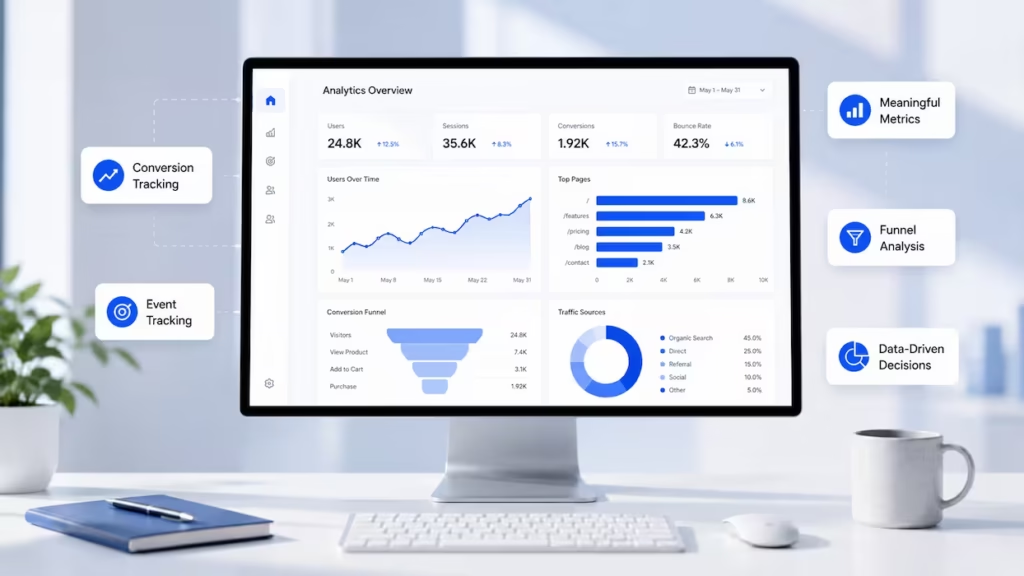
Finally, no design is perfect at launch. Instead, analytics, form‑completion data, and session behaviour reveal where visitors stall or get confused. The goal is not a monthly redesign. Rather, it is focused improvements to headlines, page structure, calls to action, and forms, based on what users actually do. Regular upkeep protects those gains — as our post on why your website needs maintenance explains.
A high‑converting website is rarely the loudest one. Instead, it communicates clearly, earns trust, and makes the next step feel simple. So if you want a site built around website conversion rather than decoration, our Web Development team can help.