

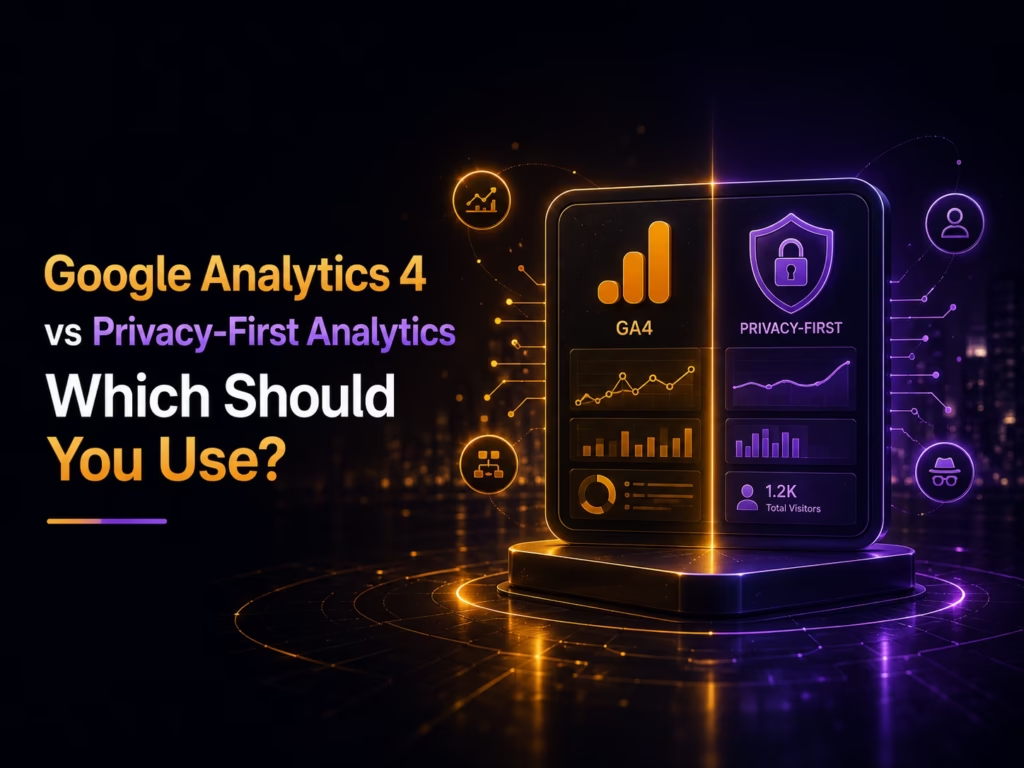
Every business wants to know who visits its site and what they do there. That’s the job of website analytics. For years, Google Analytics was the default answer. But privacy-first tools now offer a lighter, GDPR-friendly alternative. So which should your business actually use?
What website analytics needs to tell you
First, be clear on the questions that matter. How many people visit? Where do they come from? Which pages convert? Honestly, most businesses need those answers, not a hundred dashboards. Therefore, the best website analytics is the one you’ll actually read and act on.
The case for Google Analytics 4
Meanwhile, Google Analytics 4 remains powerful and free. First, it tracks users across pages and devices in real depth. Second, it ties neatly into Google Ads and Search. Third, it handles huge sites without breaking a sweat. However, it’s complex, and it sends visitor data to Google — a real GDPR consideration in the EU.
The case for privacy-first analytics
On the other hand, tools like Plausible and Fathom take a lighter path. First, they collect far less personal data, often skipping cookies entirely. As a result, you may avoid a consent banner altogether. Second, they load fast and keep dashboards simple. This fits a lean, privacy-respecting setup nicely — though they show less depth than GA4.
How to choose for your business
So how do you pick? First, if you run heavy ad campaigns and want deep funnels, GA4 earns its place. Second, if you value speed, simplicity and GDPR peace of mind, go privacy-first. Third, some teams run both. In short, match the tool to the questions you actually ask.
Whatever you choose, act on it
Finally, remember that data you never use is just noise. So pick one tool, check it monthly, and change something based on what you see. If you want help setting up clean, compliant website analytics, our team can wire it up. After all, measuring is only useful when it changes what you do.