

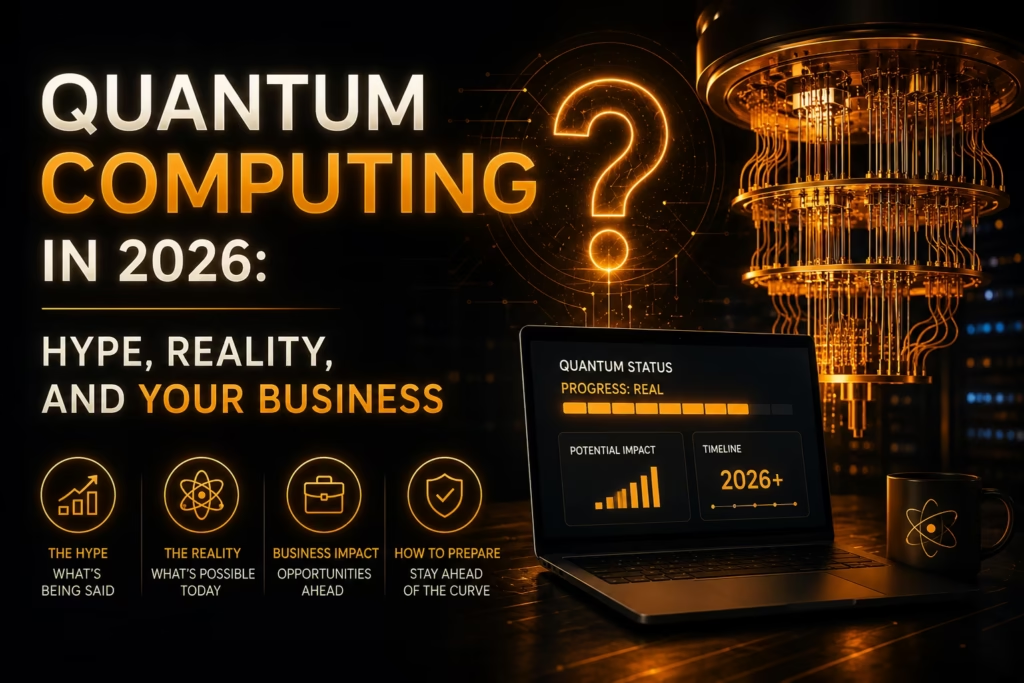
Every few months, a headline claims quantum computing will change everything — or break the internet. So should a normal business panic, or ignore it? The honest answer sits in between. Here’s a hype-free look at where quantum computing really stands in 2026, and what, if anything, you should do.
What quantum computing actually is
First, in plain terms. A normal computer uses bits that are 0 or 1. Quantum computing uses qubits that can be both at once, so certain problems get solved far faster. Therefore, it’s brilliant at specific tasks — chemistry, optimisation, cryptography — and useless at most everyday ones. In short, quantum computing is a specialist tool, not a faster laptop.
Where it stands in 2026
Meanwhile, the reality is early. Machines are growing, but they’re still fragile, error-prone and rare. Therefore, real business use remains mostly in labs and big research budgets. Honestly, no small business runs on quantum today — and won’t for years. So the “revolution” is real, but slow.
The one part you should care about: security
That said, there’s a genuine concern: encryption. In future, a powerful quantum computer could crack today’s encryption. So attackers may already “harvest now, decrypt later”. Reassuringly, the fix is underway — NIST has published post-quantum standards, and vendors are adopting them. This ties into the basic security hygiene you should already follow.
What to actually do now
- Don’t panic or spend on quantum — you don’t need it.
- Keep software and TLS updated, so you inherit post-quantum fixes.
- Ask critical vendors about their post-quantum plans.
- Watch the space yearly, no more.
The bottom line
Finally, quantum computing is a slow-burning shift, not a tomorrow problem. So stay informed, keep your security current, and otherwise get on with business. If you’d like a security review that’s ready for what’s coming, our team can help. After all, the smartest response to hype is calm preparation.