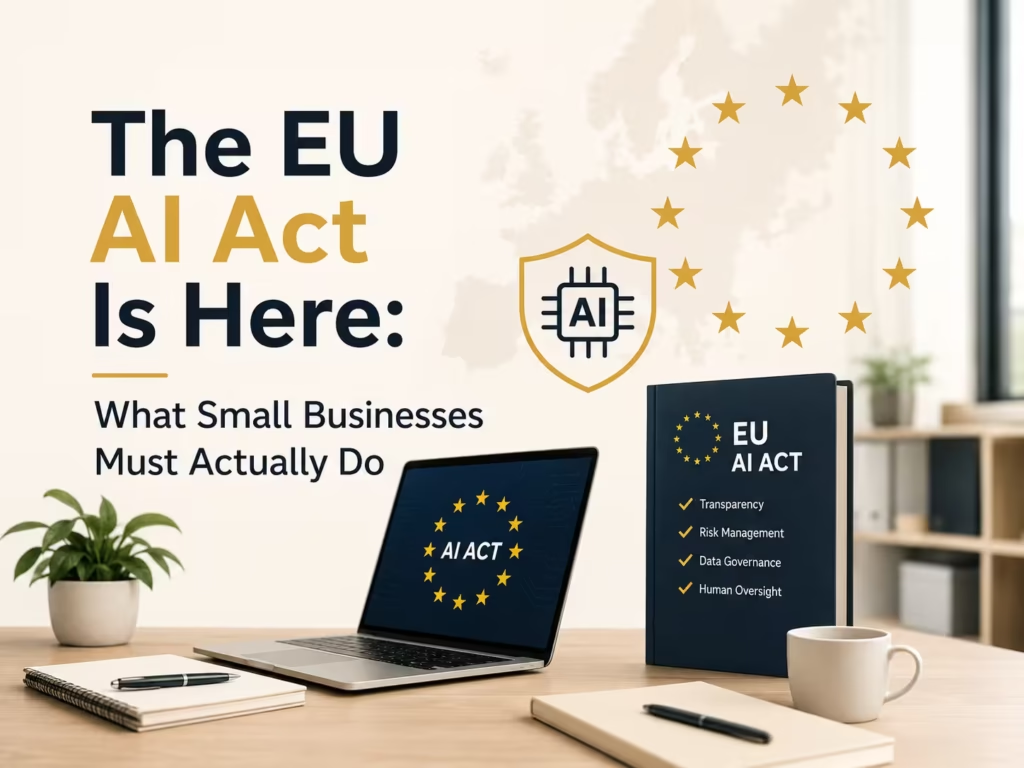
If your business touches AI — even a simple chatbot or a CV-screening tool — new rules now apply to you. The EU AI Act is the world’s first comprehensive law on artificial intelligence, and its obligations are arriving in phases through 2026. So what does the EU AI Act mean for a small business, and what should you actually do?
What the EU AI Act actually is
In short, the EU AI Act regulates AI by risk, not by industry. Therefore, the same tool can be fine in one use and restricted in another. It bans a handful of “unacceptable” uses outright. Meanwhile, it places strict duties on “high-risk” systems and lighter transparency rules on everyday ones. According to the European Commission, the aim is trustworthy AI — not a ban on it.
Which risk tier are you in?
Most small businesses land in the lighter tiers. Here’s the ladder:
- Unacceptable — banned outright (e.g. social scoring, manipulative AI).
- High-risk — heavy duties (hiring, credit scoring, biometrics).
- Limited-risk — you must disclose it (chatbots, deepfakes, AI content).
- Minimal-risk — most everyday tools; no extra rules.
What you should actually do
So, practically? First, list every place you use AI. Second, tell users when they’re talking to a bot or reading AI content. Third, keep a human reviewing any high-stakes decision. Fourth, check your vendors are compliant, because their risk becomes yours. Also, keep short notes of these steps — being able to show your process is half of compliance. This mirrors our advice on using AI agents responsibly.
The bottom line
Finally, don’t panic — get organised. The EU AI Act rewards businesses that use AI transparently and keep humans in the loop. So treat it as a trust upgrade, not just paperwork. If you’d like help auditing and labelling your AI, our team can guide you. After all, compliant AI is the kind customers actually trust.