

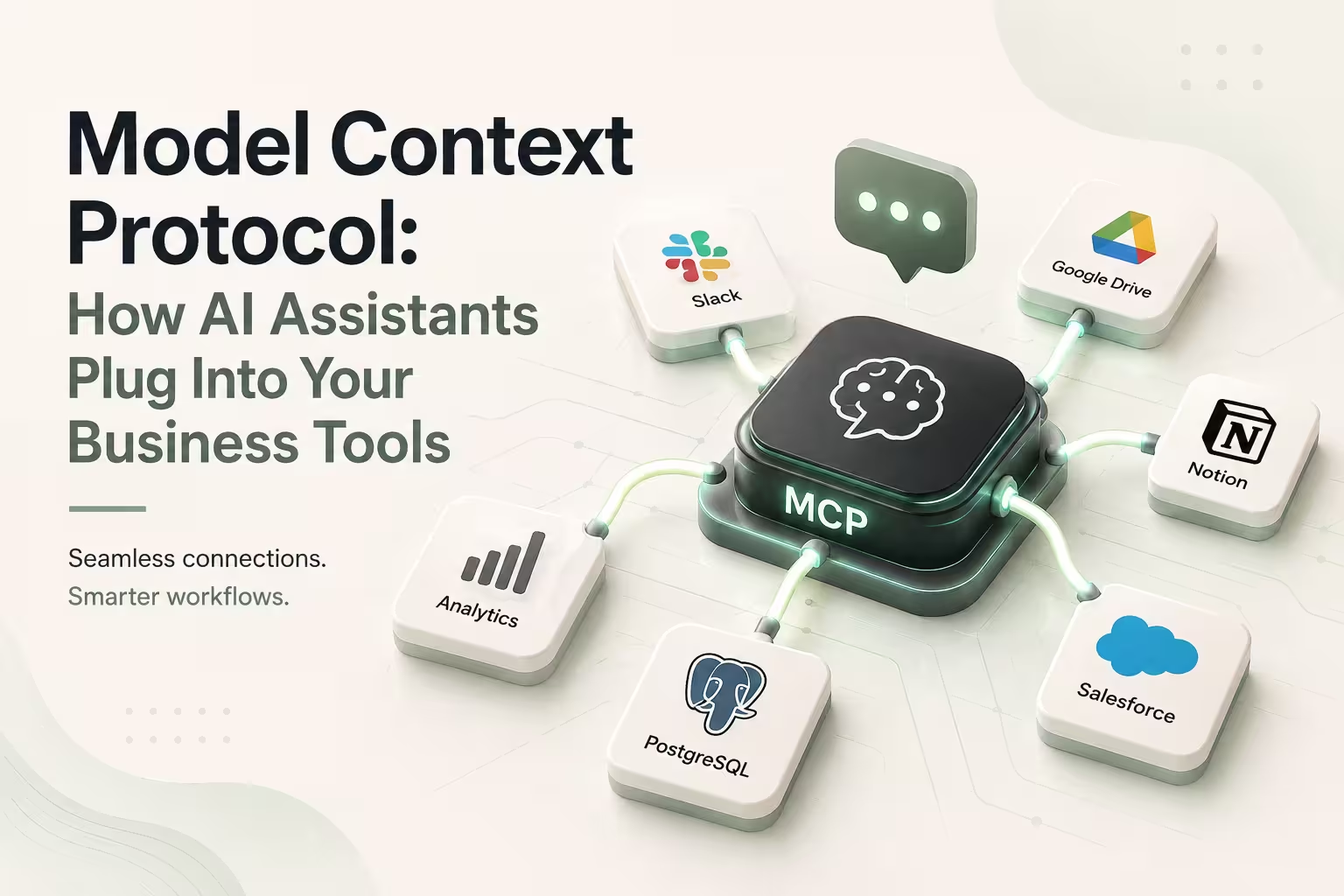
For two years, AI assistants could talk brilliantly and do almost nothing. The Model Context Protocol changed that. It gives an assistant a standard way to reach your real tools — the CRM, the file store, the ticket queue, the database — and act inside them. Consequently, “write me an email” becomes “find the overdue invoices and draft the reminders”. So what is actually going on under the bonnet?
What the Model Context Protocol is
MCP is an open standard, published by Anthropic and now supported across the major assistants. Think of it as a universal socket. On one side sits a client — Claude, an IDE, or an internal chat tool. On the other sits a server that exposes a few named capabilities: tools it can call, resources it can read, and prompts it can offer. Because the socket is standard, one integration works with every compatible client. Therefore vendors stop writing a bespoke plugin per assistant, and you stop waiting for them. The protocol documentation is public if your developer wants specifics.
Why this matters for a small business
Until now, useful automation meant custom code between every pair of systems. That work is expensive and it rots. With a shared protocol, the integration surface collapses. For example, a Greek e-shop can expose three tools — look up an order, check stock, issue a refund — and any approved assistant can then handle a support conversation end to end. Meanwhile your staff keep the final click. This is the practical version of the shift we described in AI agents in 2026: fewer chatbots, more colleagues with hands.
Where the risks sit
Now the sober part. An assistant with write access is a user, so treat it like one. First, scope credentials tightly: read-only unless a task genuinely needs to write. Second, remember that anything the model reads can try to instruct it — a hostile support ticket, a poisoned web page, a crafted PDF. That is prompt injection, and it is the reason risky actions still need human confirmation. Third, log every call, because an unlogged action cannot be audited. Fourth, review the servers you install; a community connector may be excellent, or abandoned. Our post on what AI safety means for your business unpacks the guardrails further.
A sensible way to start
Pick one painful, repetitive task with a clear boundary. Expose the smallest set of tools that solves it. Then run it read-only for a fortnight, watch the logs, and only afterwards allow writes. In addition, write down who approves what. Small scope first, because a narrow, trusted integration beats a broad one nobody dares switch on.
The strategic point is simple. Models keep improving on their own, but their usefulness inside your company depends on the plumbing you build once. The Model Context Protocol turns that plumbing into a standard rather than a series of bespoke bridges. If you want to connect an assistant to your systems without handing it the keys to everything, our team can design the boundary and build the connector.