
Building a mobile app can cost a fortune and take months. So many businesses are asking about a lighter option. Progressive web apps promise much of the app experience, straight from your website, at a fraction of the cost. But are they good enough for your business? Let’s find out.
What progressive web apps really are
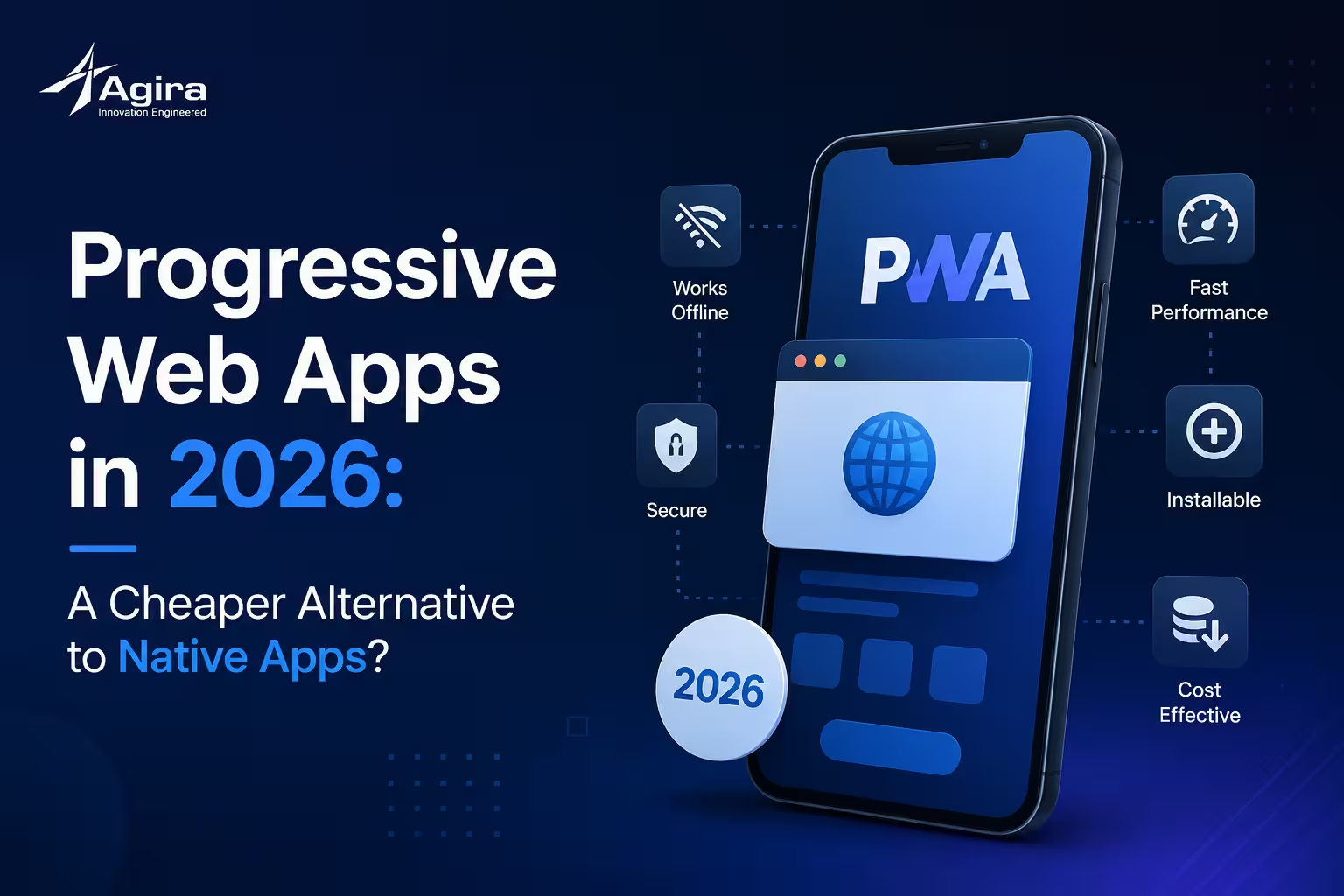
First, picture a website that behaves like an app. Progressive web apps run in the browser, yet users can install them to a home screen. Meanwhile, they work offline, send push notifications, and load fast. Therefore, they blur the line between a site and a native app. As a result, you get an app‑like feel without the app store. For the full standard, Google’s web.dev is the reference.
Why businesses choose them
So why go this route? First, cost. You build once for every device, instead of separate iOS and Android apps. Second, reach. There’s no download barrier, so users start instantly. Third, updates. You ship changes to your site, and everyone gets them at once. Therefore, progressive web apps suit businesses that want app benefits without app budgets. Because one codebase is far cheaper than three.
Where native apps still win
That said, native apps keep some advantages. First, they access every device feature, from advanced camera controls to certain sensors. Second, they can perform better for heavy graphics or games. Third, some users simply trust the app store more. Therefore, if your product needs deep hardware access, native may still be right. In short, the choice is a trade‑off, not a slam dunk — much like custom software versus off‑the‑shelf.
Speed is the whole point
Meanwhile, a progressive web app lives or dies on performance. First, it must load quickly, or the “app” feeling vanishes. Therefore, the fundamentals matter more than ever — the same ones in our website speed guide and our post on Core Web Vitals. Because a slow PWA is just a slow website with extra steps. So invest in speed first.
Is it right for your business?
Above all, match the tool to the goal. First, if you want fast mobile reach on a budget, a PWA is a strong fit. Next, if you need deep device features or app‑store presence, weigh native. Then, start with your real users’ needs, not the trend. Because the cheapest app is the one you didn’t overbuild.
The bottom line
In short, progressive web apps offer much of the app experience at a fraction of the cost — ideal for many businesses, though not all. So choose a PWA for reach and budget, and native for deep device power. If you want to explore whether a progressive web app fits your goals, our team can help you decide and build it. After all, the best app is the one your customers actually use.