
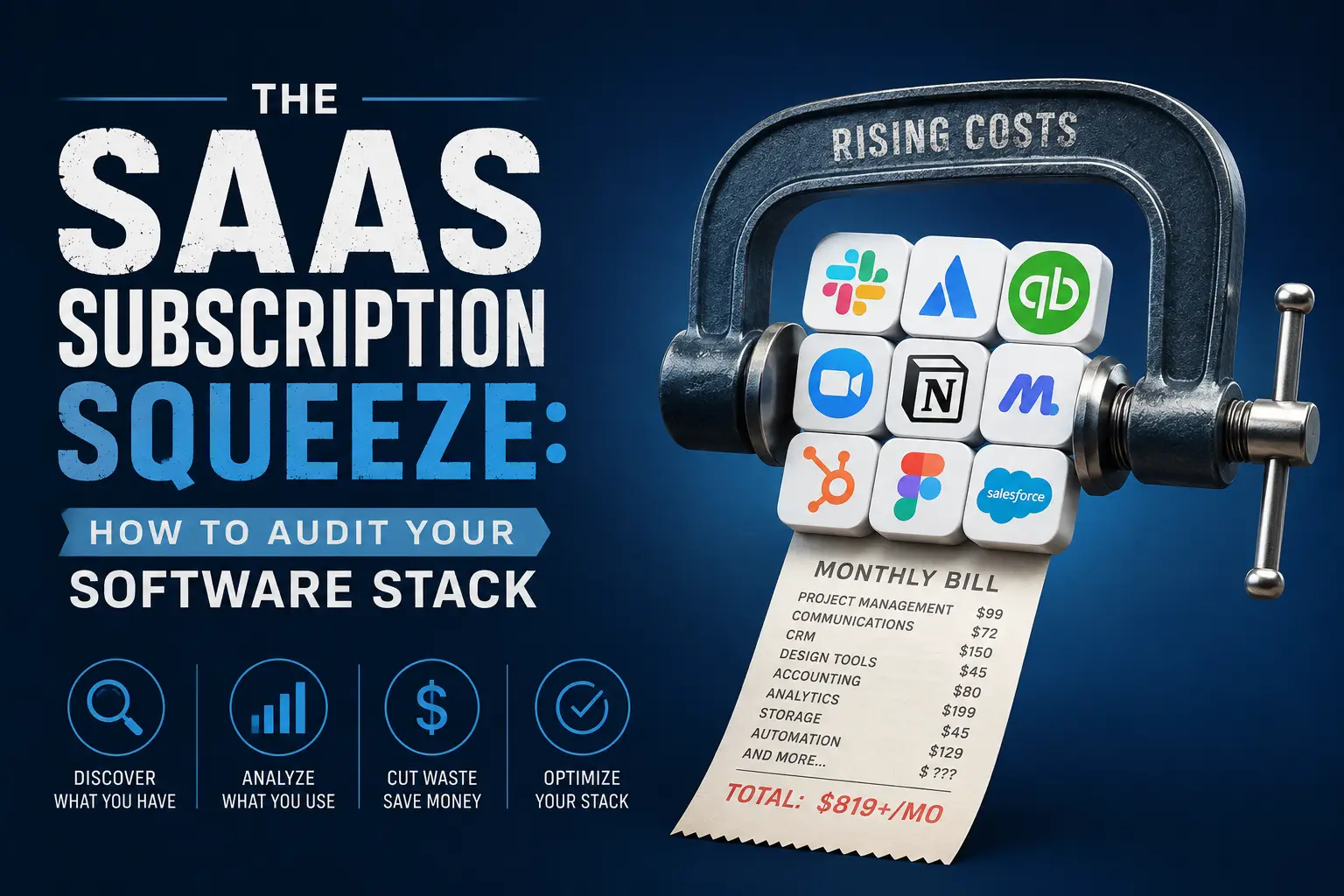
Nobody decides to spend €1,400 a month on software. It happens one €29 tool at a time, and then an AI add-on appears on three of those invoices. SaaS subscriptions have quietly become one of the largest controllable costs in a small business, and almost nobody audits them. So here is the audit we run with clients, and what it usually finds.
Why SaaS subscriptions keep climbing
Four forces push in the same direction. First, per-seat pricing grows as you hire, even when the new people barely use the tool. Second, vendors now charge extra for AI features layered onto products you already pay for. Third, annual uplifts arrive quietly at renewal. Fourth, shelfware accumulates — the trial that became a subscription, the tool the departed colleague set up. Consequently your spend rises while your usage does not, which is exactly the pattern we described in the real cost of running AI.
Start from the bank statement, not the tool list
This matters more than it sounds. Ask for twelve months of card and bank transactions, then list every recurring charge. Because the list someone maintains in a spreadsheet always misses the two subscriptions on a personal card. Next, add four columns for each line: who owns it, which business outcome it serves, when the contract renews, and how many seats are genuinely active. Then the picture becomes uncomfortable and useful at the same time.
Sort everything into four buckets
- Keep. It earns or protects money, and people use it weekly. Leave it alone.
- Cut. Nobody logged in last quarter. Cancel after exporting the data.
- Consolidate. Three tools that send email, two that build forms, two that store files. Pick one of each.
- Renegotiate. You are paying for 25 seats and using 14, or you are on last year’s plan when the current one costs less.
Meanwhile check the AI upsells specifically. If your team already has a business assistant plan, paying three vendors for a small AI feature each is often duplication — a point worth revisiting since AI got cheaper.
Before you cancel anything, check the exit
Every subscription holds some of your data. So export before you cancel, and confirm the export is usable rather than a screenshot-shaped PDF. In addition, look at who controls your domain, your DNS and your analytics, because those should never sit inside a vendor account you might leave. On the cloud side, European rules are moving in your favour: the EU’s Data Act is designed to make switching providers easier and cheaper. Therefore lock-in is becoming a negotiating point rather than a fact of life.
When building beats subscribing
Occasionally the audit turns up a €400-a-month tool used for one narrow workflow by two people. At that point a small custom build can pay for itself within two years, especially if the workflow is core to how you work. However, do not romanticise it — you then own maintenance forever. Our post on custom software versus off-the-shelf sets out the honest maths, and our email platform comparison shows how differently vendors price the same job.
Do this once a year, ideally two months before your biggest renewal. Most businesses we audit cut fifteen to thirty per cent without losing a single capability they use. If you want a second pair of eyes on your stack — including which tools your website actually needs — get in touch.