
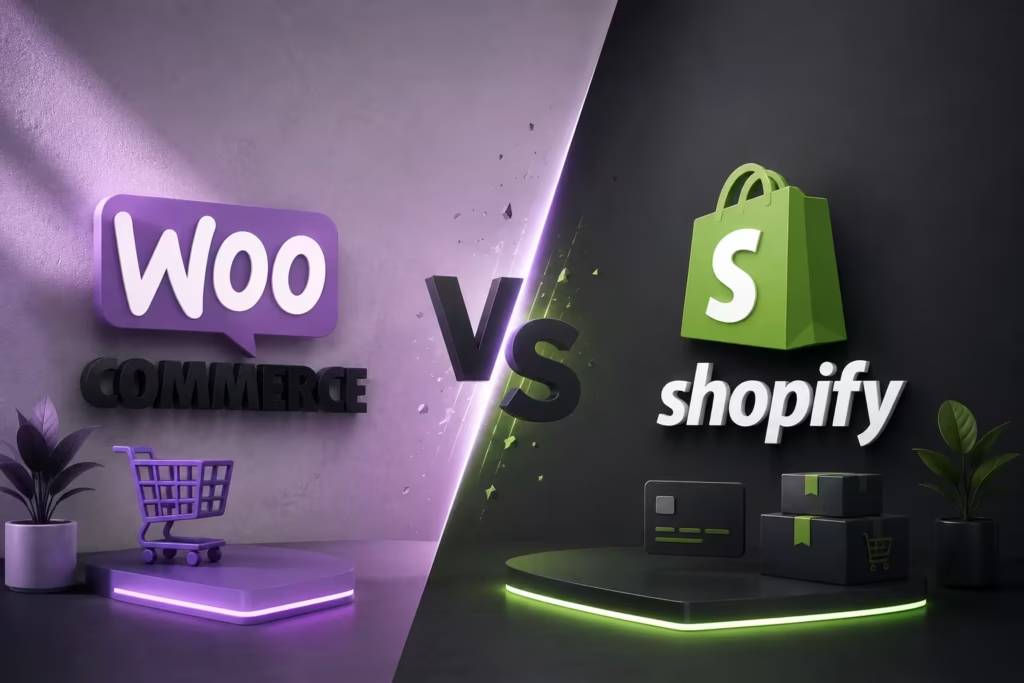
Picking an e‑commerce platform shapes your store for years. And in 2026, the WooCommerce vs Shopify question is still the one most business owners wrestle with. Both are excellent. However, they suit very different owners. So let’s compare them fairly, without the sales pitch.
WooCommerce vs Shopify: the core difference
First, understand the split. WooCommerce is a free, open‑source plugin that turns WordPress into a shop. Meanwhile, Shopify is a hosted, all‑in‑one platform you rent monthly. Therefore, the trade‑off is control versus convenience. With WooCommerce, you own everything and can change anything. With Shopify, you trade some control for a smoother, hands‑off setup.
Where Shopify wins
That said, Shopify is hard to beat on simplicity. First, hosting, security and updates are handled for you. Next, the setup is fast, so you can launch in days. Then, support is a phone call away. As a result, Shopify suits owners who want to sell, not tinker. Still, that convenience has a cost — monthly fees plus transaction charges unless you use Shopify Payments.
Where WooCommerce wins
Meanwhile, WooCommerce shines on flexibility and cost control. First, the core plugin is free. Second, you can customise every detail, because you own the code. Third, there’s no forced transaction fee. Therefore, WooCommerce fits stores with specific needs or tight margins. However, you also take on hosting, security and maintenance — the same duties covered in our WordPress security checklist. So budget for upkeep, not just the build.
The hidden costs on both sides
Either way, count the full price. On Shopify, apps and premium themes stack up quickly. On WooCommerce, hosting and developer time do. In fact, we broke down these trade‑offs in how much a business website should cost. So compare total cost of ownership, not the sticker price. Because the cheaper platform on paper often isn’t cheaper in practice.
How to choose for your store
So how do you decide? First, judge your technical comfort. If you never want to touch hosting, lean Shopify. Next, weigh customisation. If you need something unusual, lean WooCommerce. Then, factor in growth and margins. Above all, remember that both platforms convert well only with good design — as our post on why a beautiful website isn’t enough explains.
The bottom line
In short, the WooCommerce vs Shopify choice comes down to control versus convenience. So pick WooCommerce for flexibility and ownership, or Shopify for speed and simplicity. If you want a store built on the right platform for your goals, our Web Development team can help you choose and build it. After all, the best platform is the one you’ll still be happy with in three years.