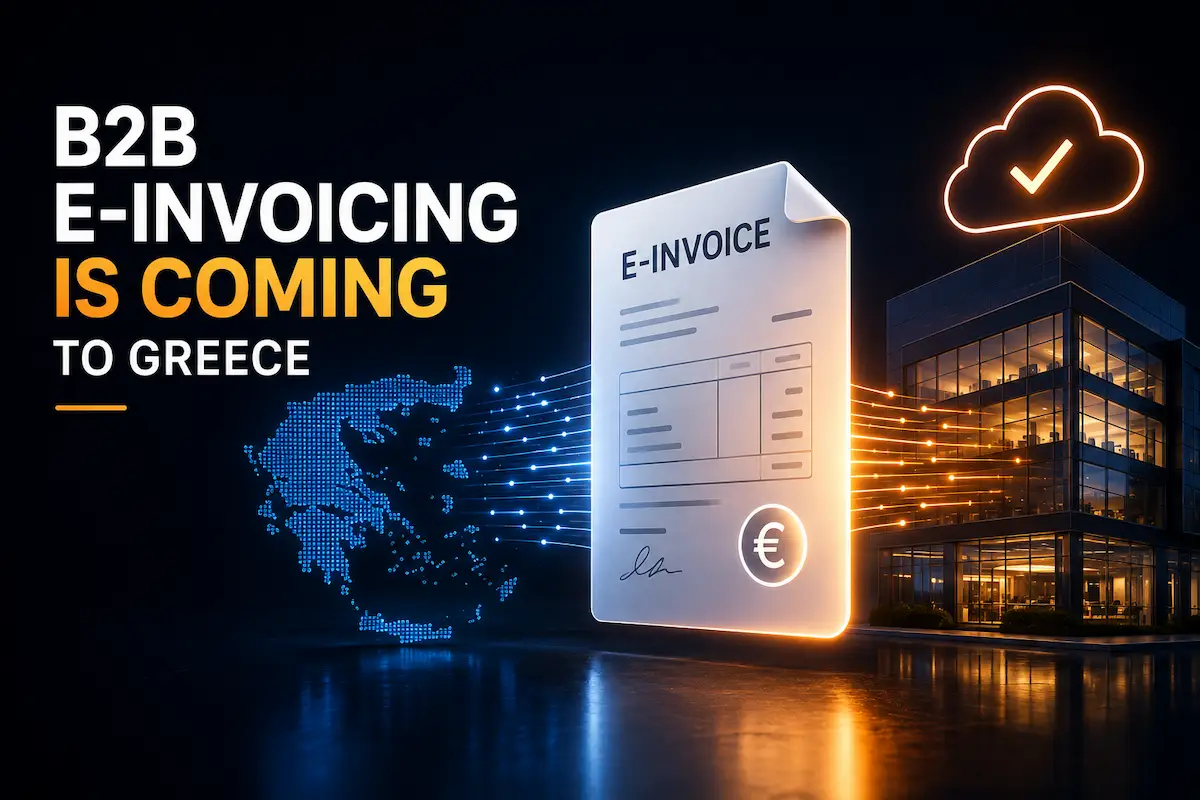
A PDF attached to an email is not an electronic invoice. That single sentence explains most of the confusion around B2B e-invoicing, and it is why many Greek businesses believe they are already compliant when they are not. A real e-invoice is structured data, issued in a defined format and transmitted through an approved channel. So what changes for your systems, and what should you do now?
Where Greece stands
Greek businesses already transmit invoice data to the tax authority through myDATA, so the concept is familiar. B2B e-invoicing goes a step further: the invoice itself becomes structured data exchanged between businesses, rather than a document you design and email. Greece has pursued EU authorisation to make this mandatory, with a phased rollout by company size. Meanwhile the EU’s wider VAT in the Digital Age package pushes every member state in the same direction.
One honest caveat: phases and deadlines have moved before, and they depend on turnover. Therefore confirm your own start date with your accountant and with the official myDATA pages rather than with a blog post. What follows is the part that does not change — the systems work.
What B2B e-invoicing changes in practice
- Format. Invoices carry mandatory structured fields, so free-text layouts stop being enough.
- Channel. You issue through a certified provider or an approved route, and each document gets an official mark.
- Timing. Transmission happens at issue, not in a monthly batch, which means your systems must be reliable daily.
- Corrections. Credit notes and cancellations follow a defined path instead of an edited PDF.
- Archiving. The structured file is the legal record, so your storage plan has to keep it retrievable.
Why your website is involved
Most owners see this as an accounting matter. However, if you sell online, the data starts at your checkout. Consequently your shop must collect and validate business details properly: company name, activity, address, and a VAT number checked against the EU VIES service rather than trusted as typed. In addition, B2B orders need correct VAT treatment before the invoice is created, because a wrong rate becomes a wrong official document.
Then comes integration. An order should flow into your invoicing system automatically, with the invoice mark flowing back to the order record. Manual re-entry survives for a while, but it breaks at volume and it hides errors. Our comparison of WooCommerce and Shopify matters here, since Greek invoicing connectors are more mature on WooCommerce.
A sensible preparation list
First, ask your accounting software vendor for their e-invoicing roadmap in writing. Second, ask your e-shop developer whether an integration exists or must be built. Third, clean your customer data now, because wrong VAT numbers become rejected invoices later. Fourth, test with a handful of real B2B customers before any deadline. Finally, keep the technical contact and the accountant in the same conversation — most failures happen in the gap between them.
Seen positively, B2B e-invoicing removes typing, speeds up payment and gives you clean data for reporting. Seen late, it becomes a scramble with an audit attached. If you want your shop and invoicing chain checked before the phase that applies to you, get in touch — we would rather look at it early.