
Analytics tells you what visitors did after they arrived. Google Search Console tells you how they found you — and, more usefully, how nearly found you. It costs nothing, it takes ten minutes to set up, and most businesses still never open it. So here is what to look at, and the two monthly habits that turn it into traffic.
What Google Search Console shows that analytics cannot
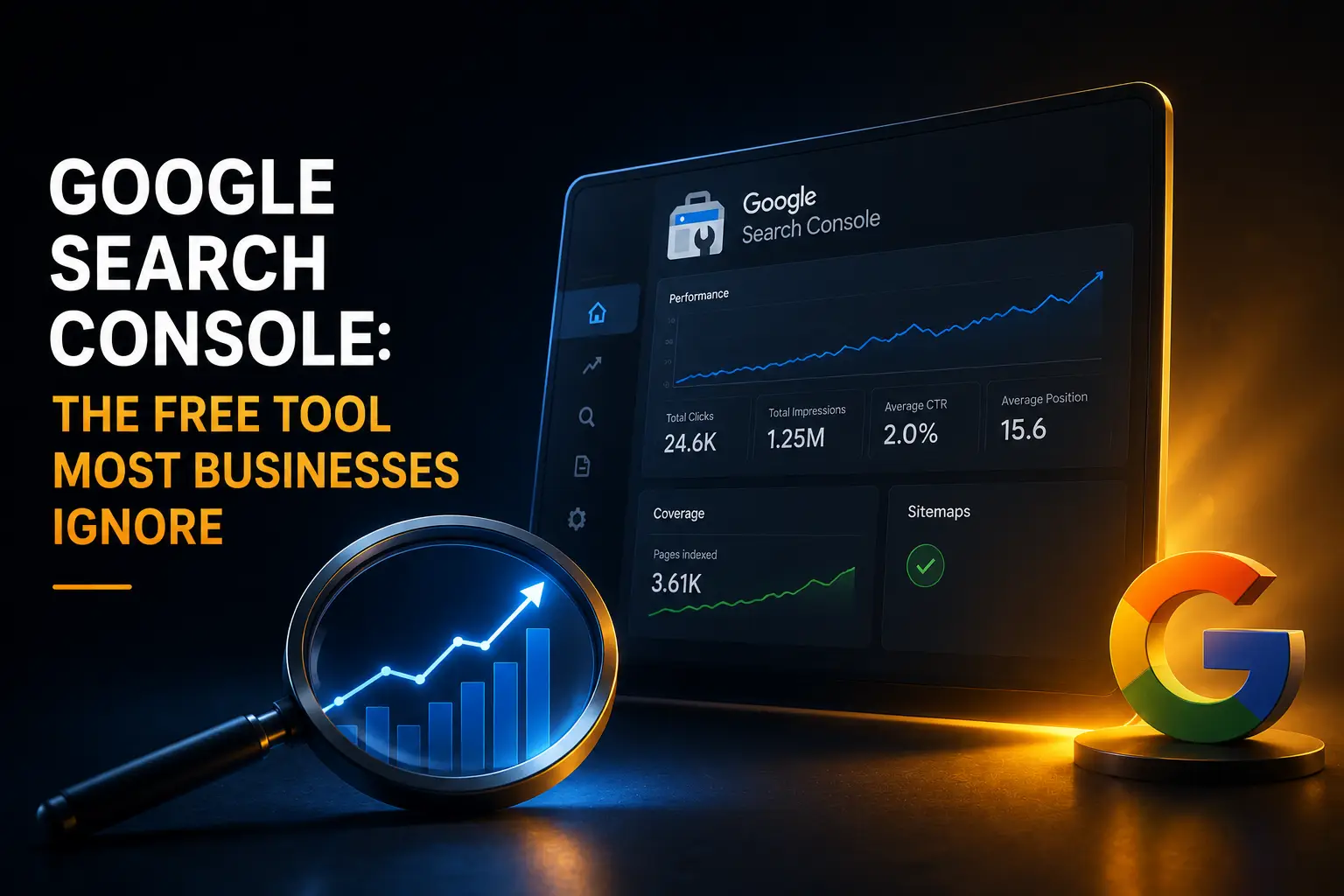
Search Console reports the search side of the relationship: the queries you appeared for, how many impressions each earned, your average position, and how often people clicked. Consequently you can see demand you are not yet serving. In addition, it reports indexing — which pages Google has accepted, which it skipped, and why. The official overview covers verification, and a domain-level property is worth the extra DNS step because it captures every subdomain and protocol.
The five reports worth a monthly look
- Performance. Compare the last three months with the previous three. Then sort by impressions to see what Google thinks you are about.
- Pages. The indexing report explains exclusions: noindex, redirects, duplicates, crawled but not indexed. Each reason has a different fix.
- Sitemaps. Confirm your sitemap is read without errors, and that the URL count roughly matches reality.
- Core Web Vitals. This is field data from real visitors, which beats any lab score — the point of our Core Web Vitals guide.
- Enhancements and rich results. If you added structured data, this is where errors surface — see schema markup explained.
Habit one: rescue pages stuck on page two
Filter the Performance report to positions eight to twenty. Those pages already have relevance; they simply lack the last push. Therefore pick three. Then rewrite the title with the real search phrase. Sharpen the meta description so it earns the click. Finally, strengthen the opening paragraph and add one internal link. Meanwhile check whether a competitor answers a sub-question you skipped. Small edits here move traffic faster than a brand-new article.
Habit two: mine the queries you never targeted
Sort queries by impressions and read the ones with a poor click-through rate. Often you will find phrases you never wrote about, ranking by accident on a vaguely related page. As a result, you get a content plan for free: each recurring query with real impressions deserves its own page, properly answered. For local businesses, add the city variants you see there to the pages described in our guide to local SEO.
Two practical notes
First, data is retained for sixteen months, so export it periodically or connect it to a reporting tool if you care about year-on-year comparisons. Second, use URL Inspection whenever a page misbehaves — it shows exactly what Google fetched, which settles most arguments in a minute. Also remember that Search Console covers Google only. So pair it with the wider view from GA4 or a privacy-first analytics tool. In addition, read AI search is the new SEO for the citation side.
Thirty minutes a month in Google Search Console is the cheapest marketing work available to a small business. If you would rather receive a short report with the three actions that matter, our team can set the property up properly and watch it with you.