
You may have heard the buzzword and wondered if it’s for you. Headless WordPress splits the friendly WordPress admin from the front end your visitors see. It sounds advanced, and it can be powerful. However, it isn’t right for everyone. So let’s explain headless WordPress in plain terms, and when it actually pays off.
What headless WordPress really means
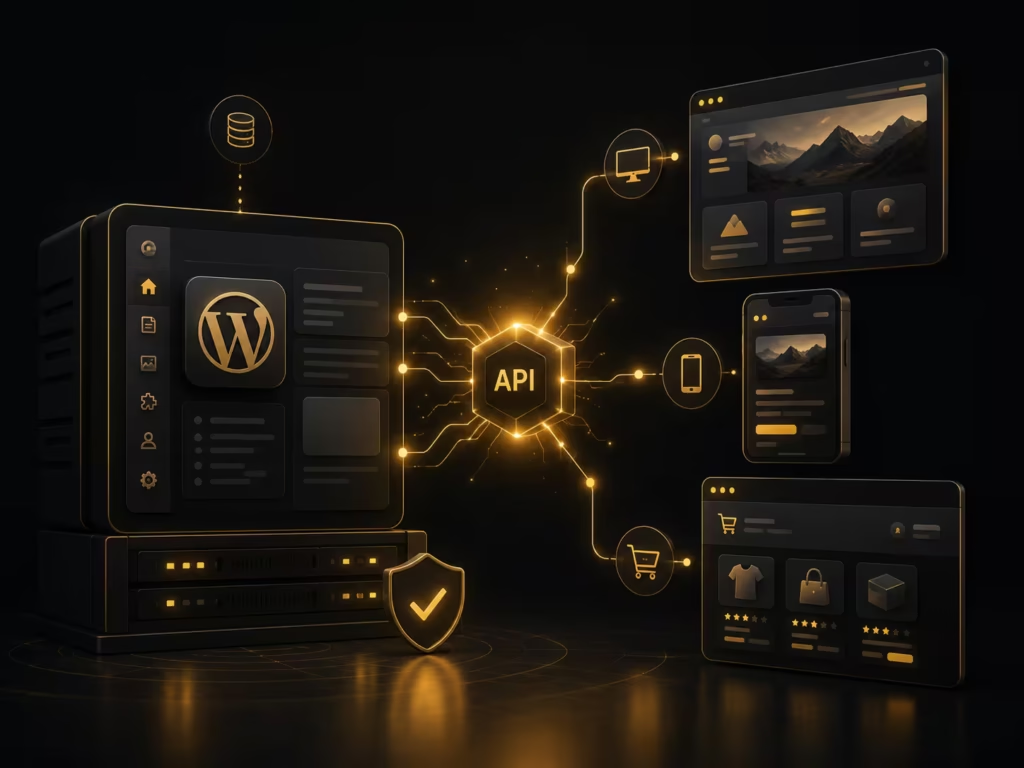
First, picture a normal WordPress site. The same system stores your content and displays it. Meanwhile, a headless setup keeps WordPress for editing, but a separate framework — often React or Next.js — renders the pages. Therefore, WordPress becomes a content engine, delivering data through its REST API. As a result, your front end can be fast, custom and app‑like.
The upsides
So why do teams go headless? First, speed. A modern front end can feel instant, which helps your Core Web Vitals. Second, flexibility. You can push the same content to a website, an app and a kiosk at once. Third, security. Because the public front end isn’t standard WordPress, many common attacks simply miss. Therefore, headless suits ambitious, high‑traffic products.
The downsides nobody mentions
That said, headless WordPress adds real complexity. First, you lose the live preview and much of the visual editing that make WordPress friendly. Second, you now maintain two systems, not one. Third, costs climb, because you need developers, not just an editor. So the convenience that makes WordPress popular partly disappears. In short, you trade ease for power.
Who should actually consider it
Meanwhile, most small business sites don’t need it. A well‑built classic or block theme is faster to run and cheaper to maintain. However, headless makes sense in specific cases. For example, a large content operation, a site feeding a mobile app, or a brand needing a bespoke, interactive front end. This is the same build‑versus‑buy logic from custom software versus off‑the‑shelf: match the tool to the need.
Speed doesn’t require going headless
Above all, don’t go headless just to chase speed. First, most sites can hit great performance with good hosting, caching and images. In fact, our website speed guide shows how far the basics take you. Then, only reach for headless when standard WordPress genuinely holds you back. Because complexity you don’t need is just cost.
The bottom line
In short, headless WordPress is a powerful option for the right project — and overkill for most. So choose it for scale, apps or bespoke front ends, and skip it otherwise. If you’re unsure which approach fits your goals, our team can advise honestly before you commit. After all, the best architecture is the simplest one that meets your needs.