
You send an important quote, and it never arrives. Later, you learn it sat in the customer’s spam folder the whole time. Frustrating, right? This is a problem of email deliverability — whether your messages actually reach the inbox. And for a small business, poor delivery quietly costs you real money. So let’s fix it.
What email deliverability really depends on
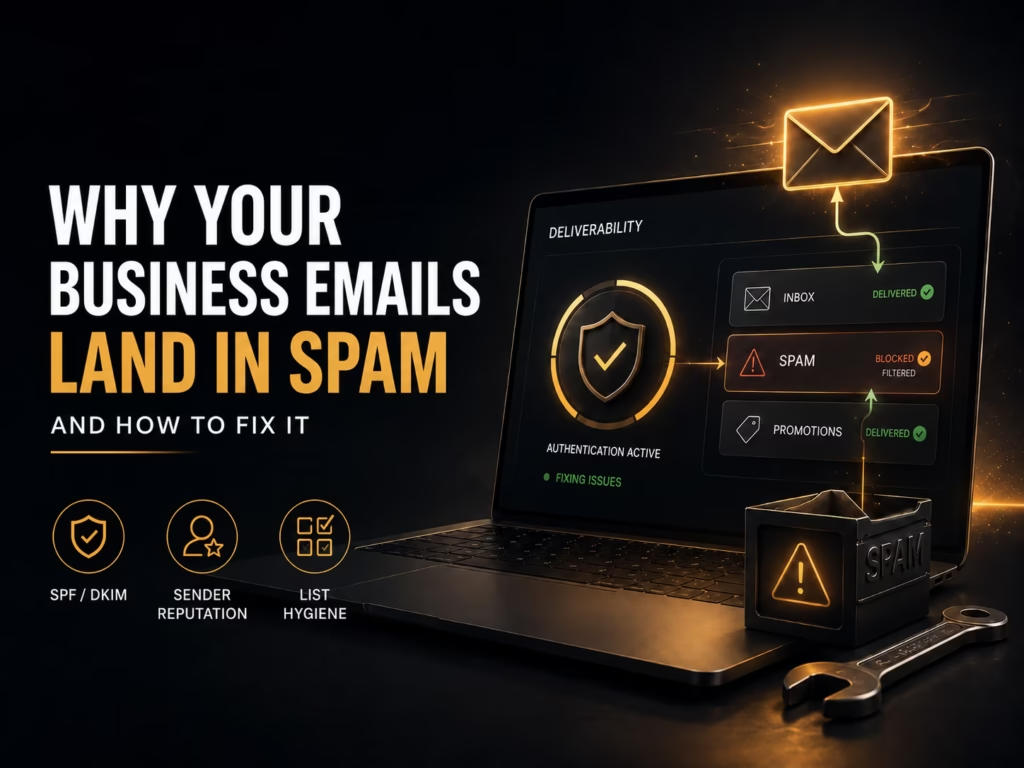
First, understand that inboxes don’t trust you by default. Instead, providers like Gmail and Outlook score every sender. Therefore, email deliverability rests on three things: your reputation, your authentication and your content. Get them right, and you land in the inbox. Get them wrong, and even a genuine quote looks like spam.
Authenticate your domain: SPF, DKIM, DMARC
Above all, set up the three records that prove you are you. First, SPF lists the servers allowed to send for your domain. Second, DKIM signs each message so it can’t be forged. Third, DMARC tells inboxes what to do if a message fails. Together, they build trust. You can check yours with a free tool from DMARC.org. Without them, expect the spam folder.
Send from your domain, not a free inbox
Meanwhile, never send business mail from a gmail.com or hotmail.com address through your website forms. Instead, use your own domain via a proper SMTP service. This is also why we wire contact forms to authenticated delivery — the same logic behind a secure WordPress setup. As a result, your mail is traceable and trusted.
Watch your content and your list
Also, the message itself matters. First, avoid spammy words, all-caps subjects and link-stuffed bodies. Second, keep your list clean — remove addresses that bounce. Third, make unsubscribing easy, because complaints hurt your reputation fast. In short, behave like a sender people actually want to hear from.
Test before you trust it
Finally, don’t assume — test. Send to Gmail, Outlook and Yahoo, and see where you land. Also, monitor your bounce and complaint rates over time. If your business email keeps hitting spam, our team can set up authenticated delivery properly. After all, an email that never arrives is a sale you never made.